The Most Profitable Video Game Genres: Which Make the Most Money?
Which game genres earn the most? Newzoo's 2026 forecast and Sensor Tower's H1 2026 mobile data, with a warning about mixing mobile, PC and console.
In brief
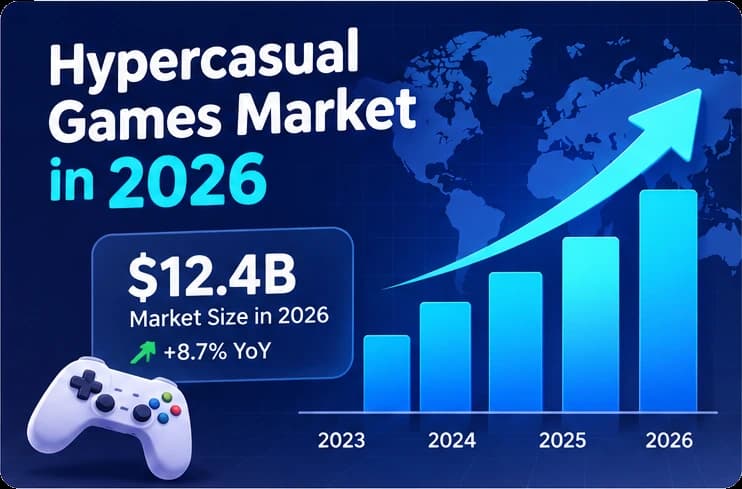
- Newzoo expects the global games market to reach $213.9 billion in 2026, up 6.1%, with mobile at $121.1 billion, or 57%.
- There is no single genre ranking: mobile, PC and console are different markets, and research firms define genres and revenue differently.
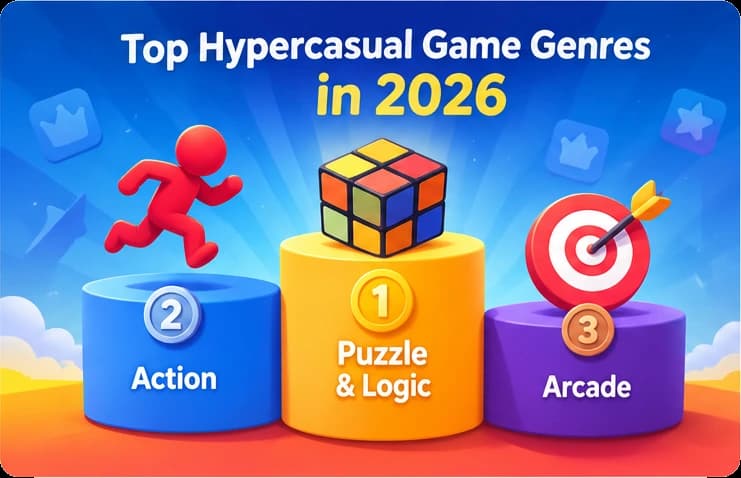
- On mobile in the first half of 2026, Strategy ($9.27B), Puzzle ($8.07B) and RPG ($6.12B) led in-app purchase revenue, per Sensor Tower.
- Puzzle grew almost 20% year over year while Strategy fell about 5%, and RPG and Casino declined.
- The most profitable genre is rarely the right genre for a small team.
The video game industry earns billions every year, but genres do not earn money in the same way. Some depend on in-game purchases, some on premium sales, subscriptions or downloadable content, and some on advertising. For a developer, knowing which genres earn the most helps when choosing a project, studying competitors or planning monetization.
This article needs one warning up front: mobile, PC and console are different markets, and a genre that leads on one can look very different on another. So instead of a single misleading league table, we show what the public data can support.
The global market: $213.9 billion
According to Newzoo's 2026 Global Games Market forecast, as reported by GameDev.net, the industry is expected to generate about $213.9 billion in 2026, up 6.1% year over year. Mobile is the largest platform.
| Platform | 2026 forecast | Share | Growth |
|---|---|---|---|
| Mobile | $121.1 billion | 57% | +6.8% |
| Console | $46.9 billion | 22% | +5.1% |
| PC | $45.9 billion | 21% | +5.3% |
Newzoo counts consumer spending on content and services, so console and PC hardware are not included, and it ties much of console's growth to the release of GTA VI. PC growth is expected to slow after a record 2025.
Mobile: what the first half of 2026 shows
The clearest recent genre figures come from Sensor Tower's first-half 2026 data, summarized by GameDev Reports on August 17, 2026. Total mobile in-app purchase revenue was about $40 billion, down 2% from a year earlier.
| Genre | H1 2026 IAP | Share of total* | Change vs. last year |
|---|---|---|---|
| Strategy | $9.27 billion | about 23% | about −5% |
| Puzzle | $8.07 billion | about 20% | almost +20% |
| RPG | $6.12 billion | about 15% | not stated; the genre is struggling |
*Shares are calculated against the rounded $40 billion total. The summary gives no revenue totals for the other genres, so we do not invent them.
What is growing and what is shrinking
Naavik's analysis of Sensor Tower data shows what moved in the first half of 2026. Its dollar changes come from a different slice of the data, so they will not match the table above exactly, but the direction is the same.
- Puzzle: up $915 million, driven by Merge 2 games (+$640 million) and Sort games (+$303 million).
- Strategy: down $319 million, almost all of it from Pokémon TCG Pocket (−$300 million), while 4X strategy grew $193 million.
- RPG: down $664 million, led by MMORPGs (−$455 million), though open world adventure games grew $173 million.
- Casino: down $376 million, with slots accounting for −$233 million.
- Shooter: up $218 million, driven by first- and third-person shooters (+$225 million), mainly Tencent titles in China.
- Action: down $250 million, including shoot 'em ups (−$101 million).
Two more details from the GameDev Reports summary: Sports game spending grew 7% year over year while the whole market fell 2%, and Simulation led in playtime with 44.14 billion hours and 4.57 billion installs, although the summary gives no revenue figure for it.
How each genre makes money
The rest of this section describes common monetization methods in each genre. It is general industry practice, not drawn from the reports above.
Strategy
Strategy games ask players to make decisions, gather resources, build armies and compete. Subgenres include 4X, real-time, turn-based, tower defense and tactical strategy. Progress builds over weeks or months, so these games typically sell in-app purchases, resource packs, time-saving items, season passes and event bundles.
Role-playing games
RPGs let players grow characters, unlock abilities and follow stories, which creates a long relationship between a player and their character. Players may pay for character unlocks, equipment, cosmetics, premium currencies and expansions. Gacha RPGs make that the core of the business.
Puzzle and casual games
Puzzle games have simple rules and short sessions. Match-three, word, block, logic and physics puzzles earn through advertising, rewarded video, extra lives, hints and boosters, premium versions and optional purchases. Their accessibility suits mobile devices and browsers: a puzzle game can reach a broad audience without complex graphics or a long tutorial.
Casino
Social casino games, such as slots, poker-style games and bingo, typically use virtual currencies and optional purchases. They are different from real-money gambling products, which fall under their own legal requirements and regulations.
Shooters
Shooters attract large audiences on PC, console and mobile. Revenue usually comes from premium purchases, cosmetic skins, battle passes, character purchases, expansions and seasonal content, supported by long-term updates to keep competitive players around.
Simulation and sports
Simulation games, such as city builders, farming and management games, earn through premium purchases, expansions, downloadable content and optional in-game purchases. Sports and racing games often combine annual releases and premium editions with cosmetic items and live-service purchases.
What indie developers should take from this
The most profitable genre is not necessarily the best genre for a small team. A large strategy game may need multiplayer infrastructure, live operations, continuous content, backend services and a community team. A small puzzle game can be far easier to build and maintain. Before choosing a genre, ask five questions.
How complex is it to build?
How much time and technical knowledge will the game need, and can you finish it?
Who is the audience?
Who will play it, and what else do they already play?
How will it earn money?
Advertising, premium purchase, subscription or optional content, and does your genre fit that model?
Will players come back?
Is there a reason to return after the first session?
What makes it different?
Can the game offer something existing titles do not?
Final thoughts
Strategy, puzzle, RPG, casino, shooter, simulation and sports games all have real commercial opportunity, and the numbers move every quarter. But revenue potential should never be the only reason to choose a genre. A successful game needs a clear audience, enjoyable mechanics, strong execution and a sustainable business model. For independent developers, a small, polished game that players genuinely enjoy is often a better start than competing with large studios.
Sources
- Newzoo, 2026 Global Games Market Key Numbers — Primary source for the forecast. The figures quoted here are as reported by GameDev.net and Wccftech.
- GameDev.net, Newzoo: Global games market to generate $213.9bn in 2026, up 6.1% YoY
- Wccftech, Newzoo predicts $213.9 billion global games market in 2026
- GameDev Reports, Sensor Tower: The Gaming Market in H1'26 (August 17, 2026) — Source of the H1 2026 genre figures. Shares are our calculation.
- Naavik, H1 2026: Mobile Gaming's Stability Illusion — Analysis of Sensor Tower data; source of the genre-level changes.
- Sensor Tower, State of Gaming 2026